Daily SERP Analytics: A Monitoring and Decision Workflow
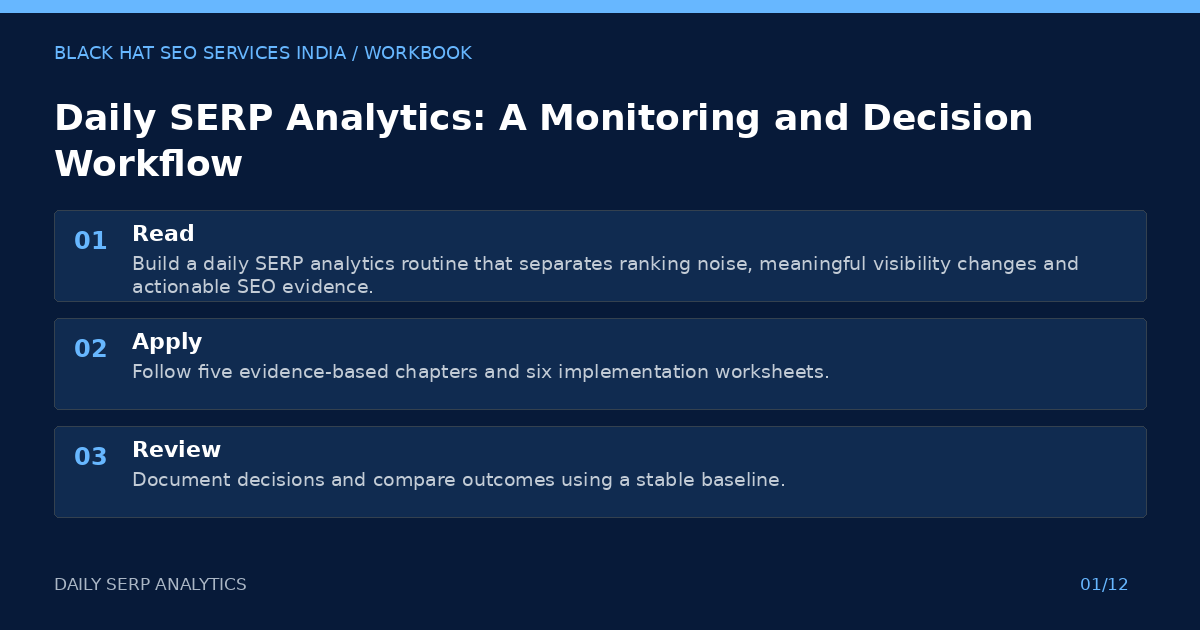
Build a daily SERP analytics routine that separates ranking noise, meaningful visibility changes and actionable SEO evidence.
A practical starting point
Daily SERP analytics means observing search-result changes against a consistent question set. Begin with the queries, landing pages and markets that matter to the business. Separate branded queries from discovery terms and commercial searches from informational research. For an India-focused campaign, record the location, language and device used for each observation. Comparing a national desktop result with a city-specific mobile result can create a false alarm. Keep the sampling method stable and preserve the original export before adjusting the dashboard.
In this guide
Table of contents
- A practical starting point
- Define a stable monitoring scope
- Combine result snapshots with first-party data
- Build an investigation threshold
- Assign the right technical or editorial check
- Report decisions and outcomes
- Visual implementation workbook
- Measurement and decision rules
- Continue your research
- Frequently asked questions
- Download the companion PDF
- Credits, sources and further review
- Need a search-growth plan for your website?
Define a stable monitoring scope
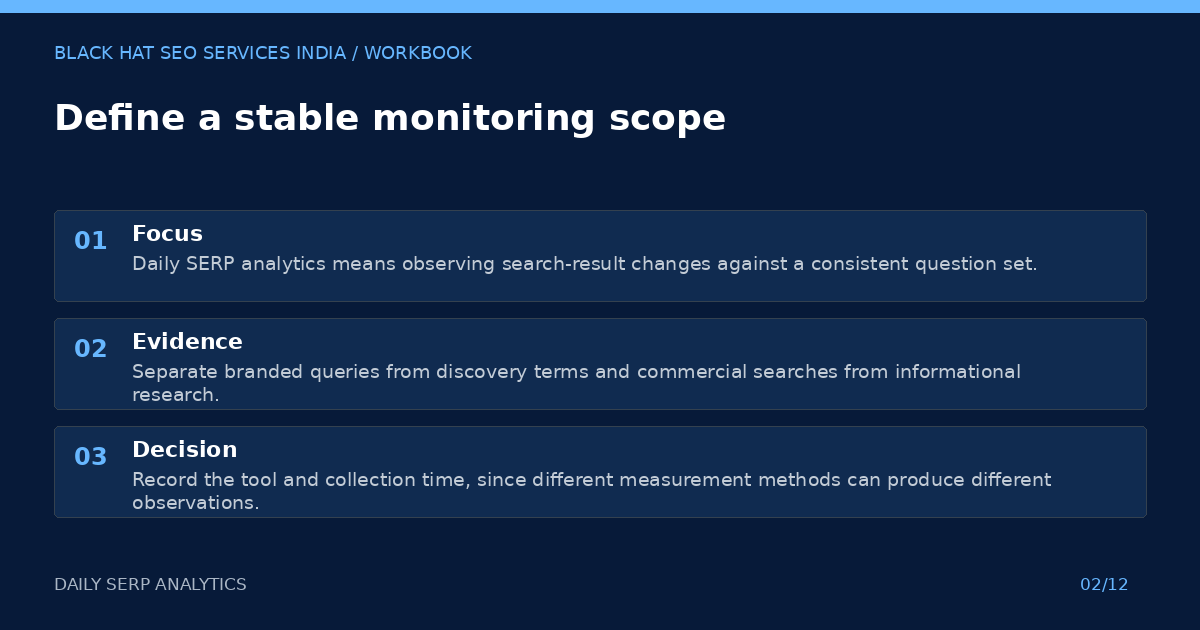
Daily SERP analytics means observing search-result changes against a consistent question set. Begin with the queries, landing pages and markets that matter to the business. Separate branded queries from discovery terms and commercial searches from informational research. For an India-focused campaign, record the location, language and device used for each observation. Comparing a national desktop result with a city-specific mobile result can create a false alarm. Keep the sampling method stable and preserve the original export before adjusting the dashboard.
A daily workflow should answer what changed and whether the change deserves investigation. It should not trigger a rewrite every time one keyword moves. Group queries by intent and expected destination page so that a broad cluster change is easier to distinguish from a single unusual result. Record the tool and collection time, since different measurement methods can produce different observations.
Combine result snapshots with first-party data
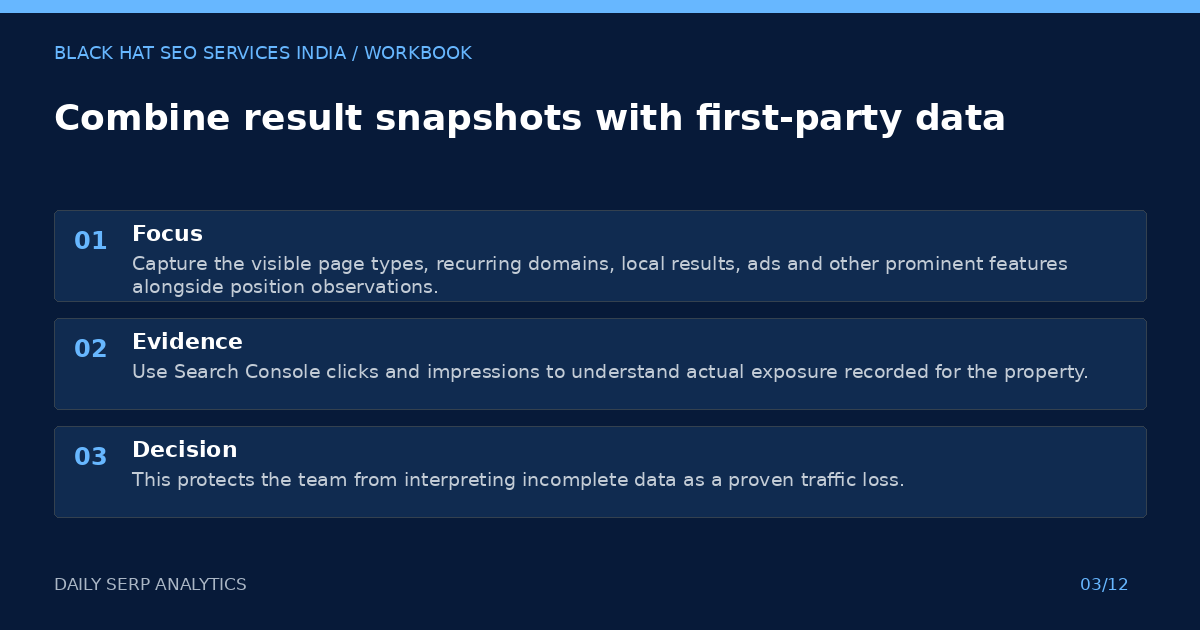
Capture the visible page types, recurring domains, local results, ads and other prominent features alongside position observations. A page can retain a similar position while receiving fewer clicks when the surrounding result experience changes. Use Search Console clicks and impressions to understand actual exposure recorded for the property. Treat an external rank tracker as a sample rather than a full account of every searcher experience. Search Console performance data is also not a real-time feed, so distinguish the collection date from the reporting date.
Keep a small evidence record for each meaningful event: affected queries, sample URLs, observed result changes and concurrent releases. If a monitoring tool reports a fall but first-party data has not yet updated, label the event as awaiting confirmation. This protects the team from interpreting incomplete data as a proven traffic loss.
Build an investigation threshold
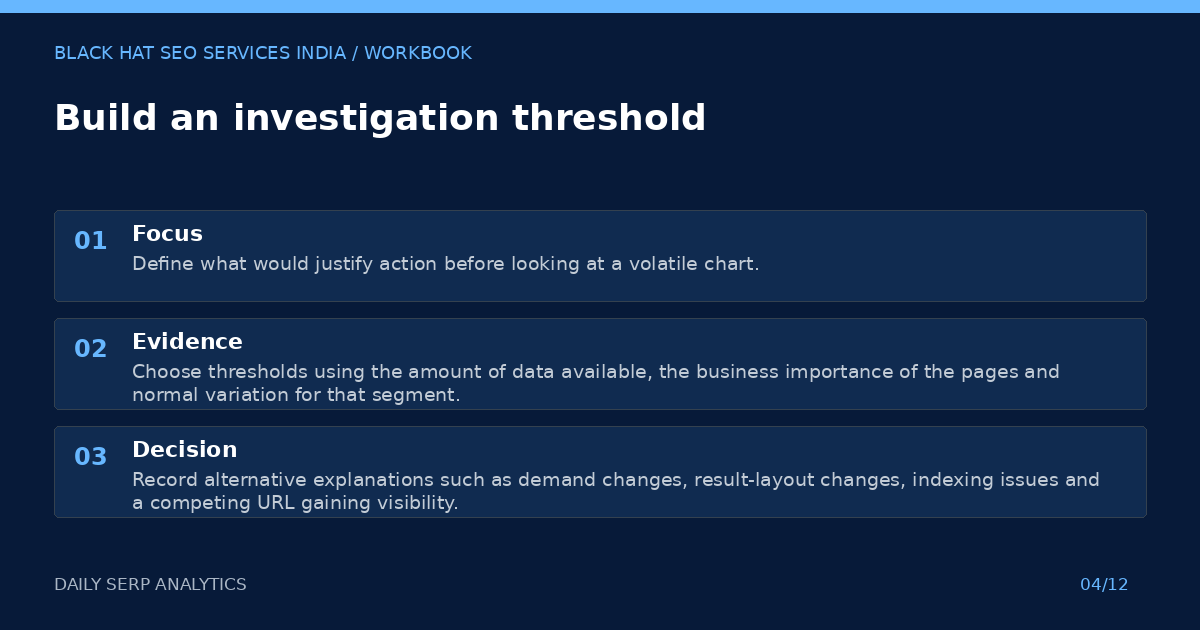
Define what would justify action before looking at a volatile chart. You might investigate when several important queries and their landing pages show a sustained change across comparable observations. Choose thresholds using the amount of data available, the business importance of the pages and normal variation for that segment. A single universal percentage is rarely suitable for every site. Low-volume queries can swing sharply even when very few impressions are involved.
Separate monitoring alerts from implementation decisions. An alert should open a review, not automatically change titles, canonicals or internal links. Check whether the movement affects a template, a location, a device or an intent cluster. Record alternative explanations such as demand changes, result-layout changes, indexing issues and a competing URL gaining visibility.
Assign the right technical or editorial check
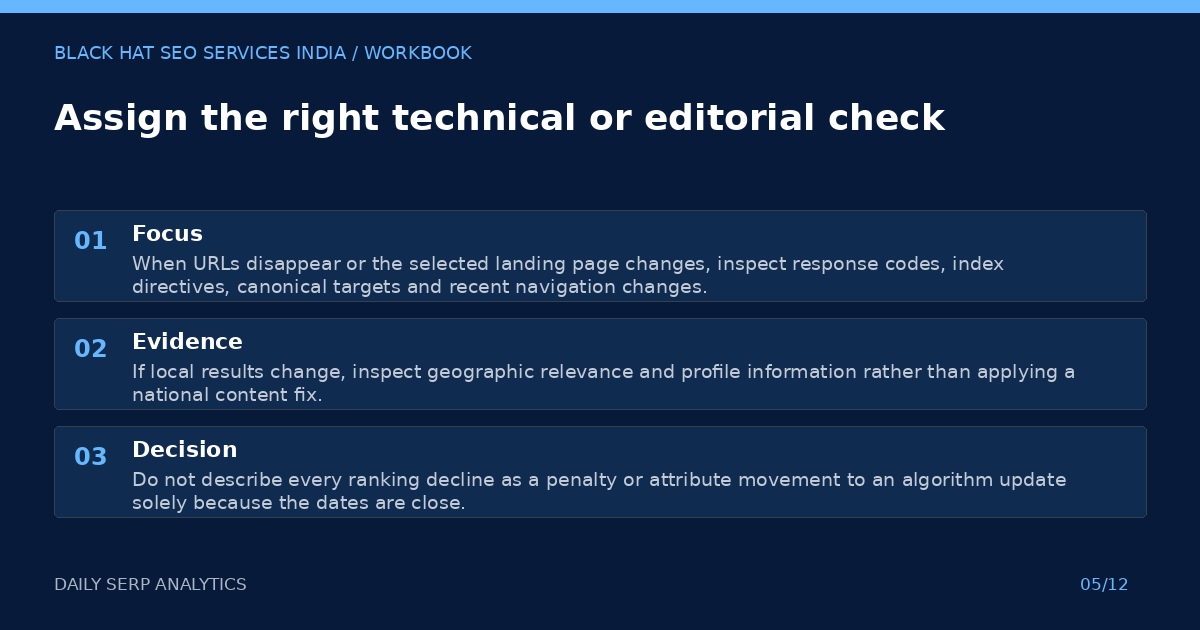
When URLs disappear or the selected landing page changes, inspect response codes, index directives, canonical targets and recent navigation changes. When pages remain available but answer the wrong task, review the content and the dominant search intent. If local results change, inspect geographic relevance and profile information rather than applying a national content fix. Use a stable comparison page where possible to see whether the issue is specific to one release or broader than your website.
Document the proposed repair and the evidence supporting it. For example, correcting an accidental noindex instruction is a different intervention from improving an incomplete comparison guide. Keep changes bounded and preserve a rollback path. Do not describe every ranking decline as a penalty or attribute movement to an algorithm update solely because the dates are close.
Report decisions and outcomes
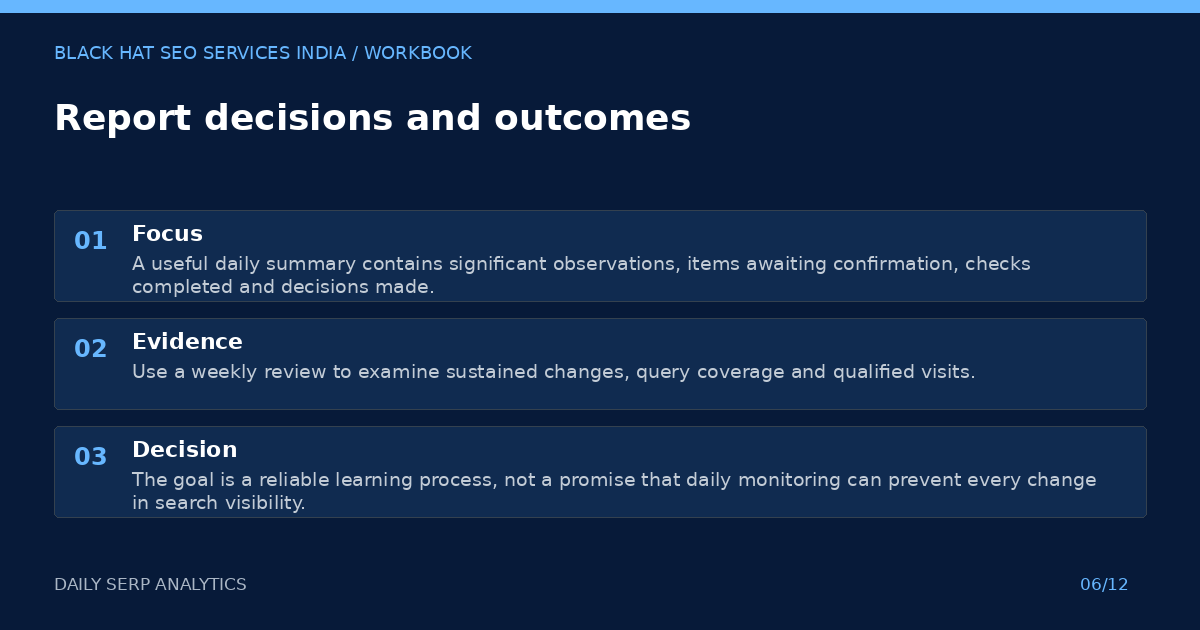
A useful daily summary contains significant observations, items awaiting confirmation, checks completed and decisions made. Keep the operational report short enough that people can act on it. Use a weekly review to examine sustained changes, query coverage and qualified visits. Connect the monitoring process to business outcomes when reliable conversion data exists, while keeping search visibility and commercial performance as separate measurements.
Review whether alerts were useful. Too many unimportant alerts create fatigue; too few can hide a template failure. Refine the thresholds from documented examples and retain the same comparison method when evaluating a repair. The goal is a reliable learning process, not a promise that daily monitoring can prevent every change in search visibility.
Visual implementation workbook
Use these six distinct worksheets to plan the work and retain an audit trail. Add your own URLs, findings and owners alongside each stage.
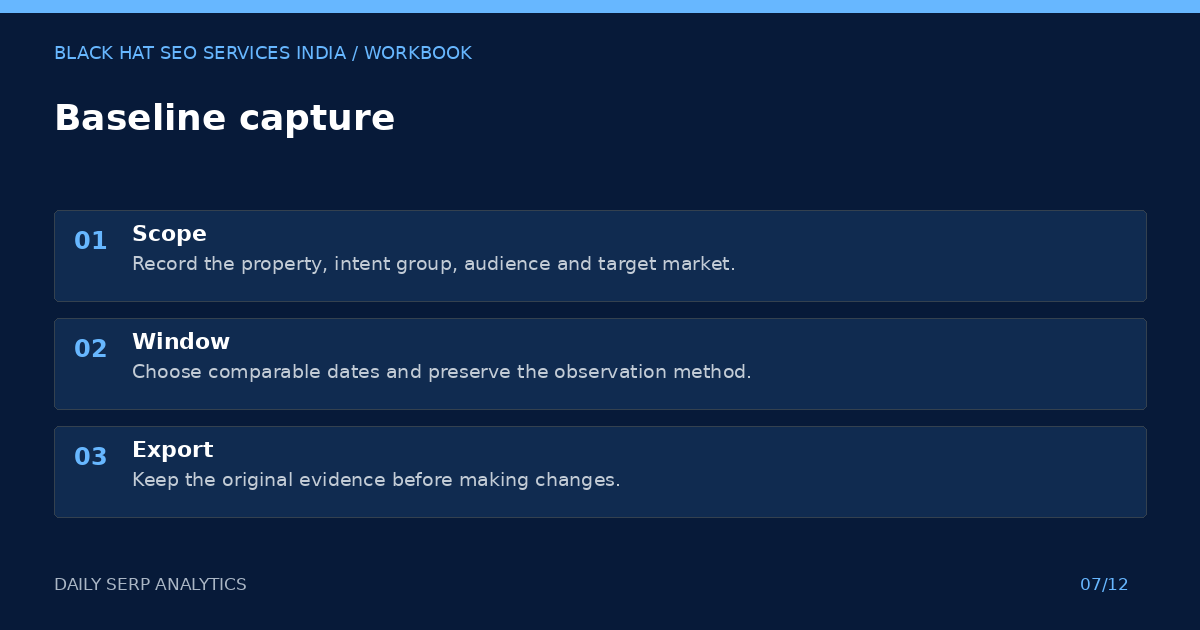
Scope: Record the property, intent group, audience and target market. Window: Choose comparable dates and preserve the observation method. Export: Keep the original evidence before making changes.
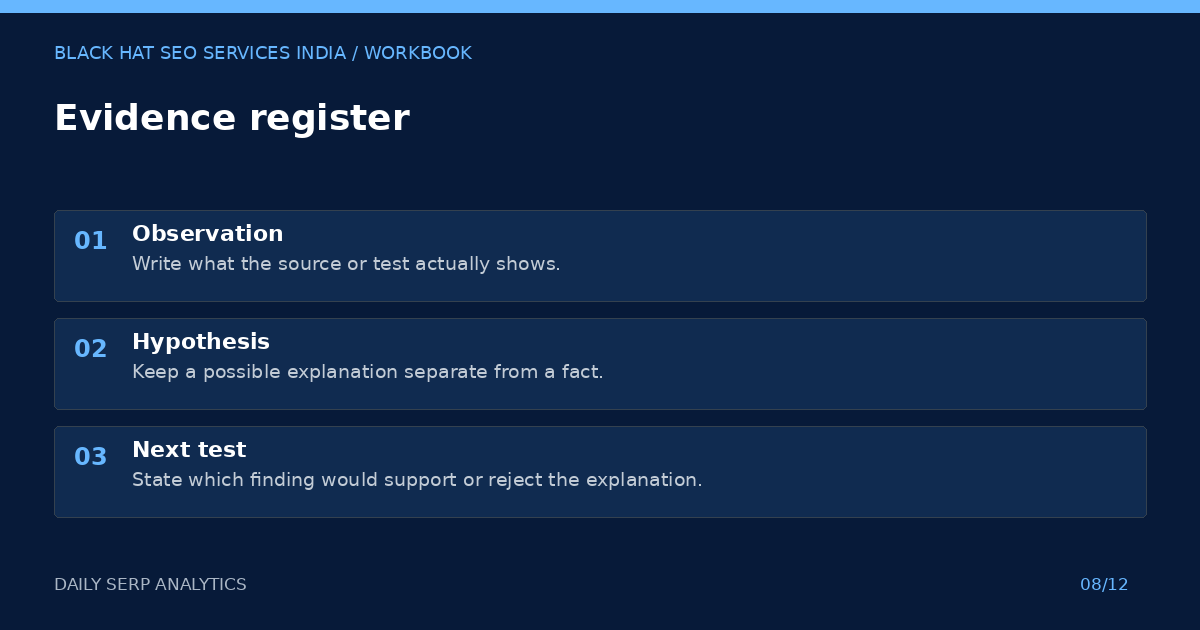
Observation: Write what the source or test actually shows. Hypothesis: Keep a possible explanation separate from a fact. Next test: State which finding would support or reject the explanation.
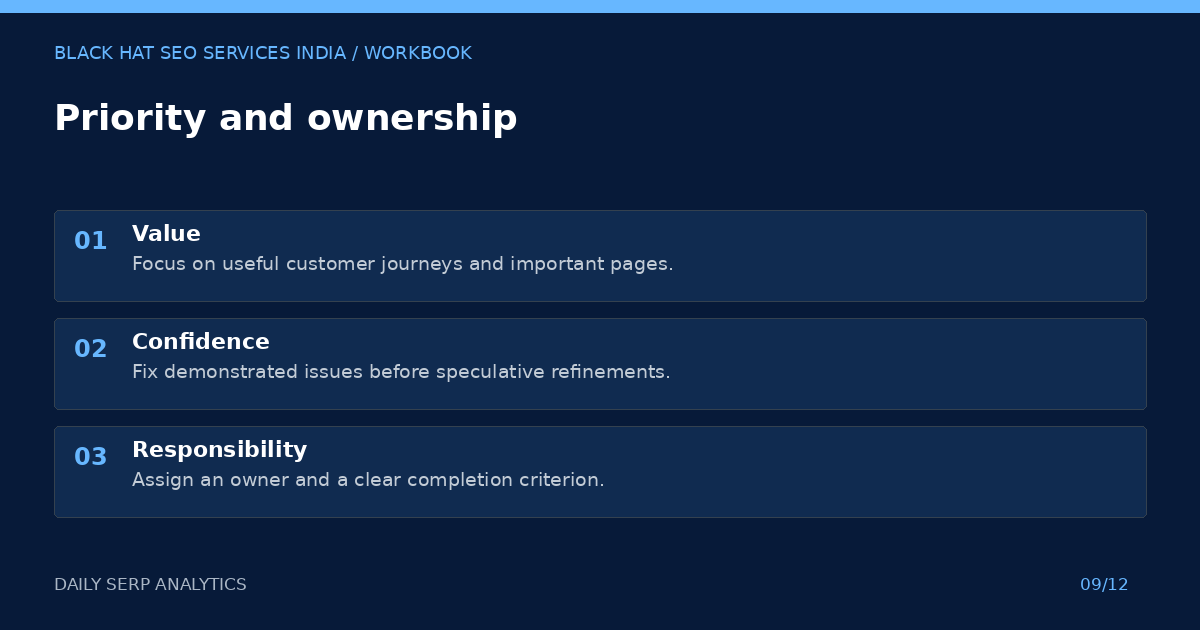
Value: Focus on useful customer journeys and important pages. Confidence: Fix demonstrated issues before speculative refinements. Responsibility: Assign an owner and a clear completion criterion.
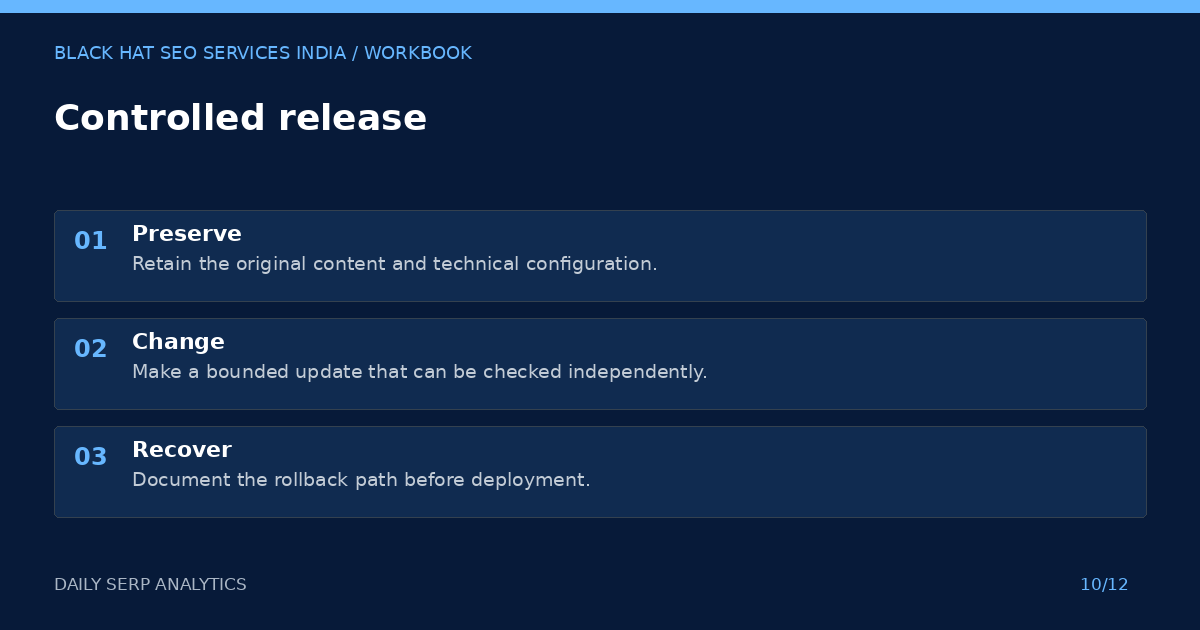
Preserve: Retain the original content and technical configuration. Change: Make a bounded update that can be checked independently. Recover: Document the rollback path before deployment.
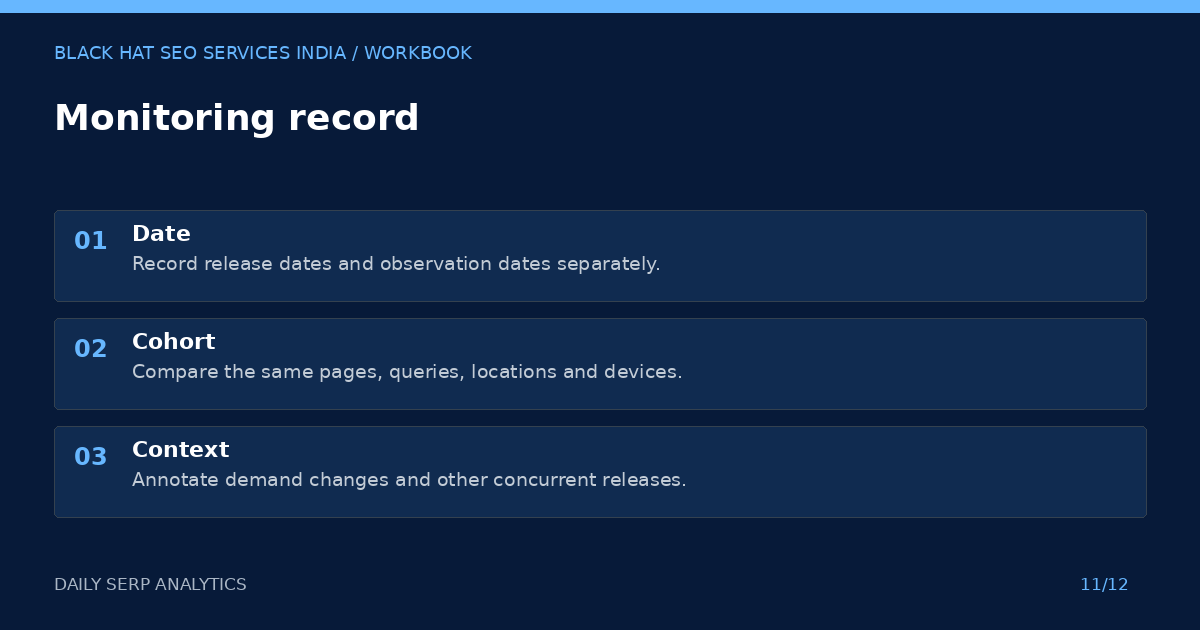
Date: Record release dates and observation dates separately. Cohort: Compare the same pages, queries, locations and devices. Context: Annotate demand changes and other concurrent releases.
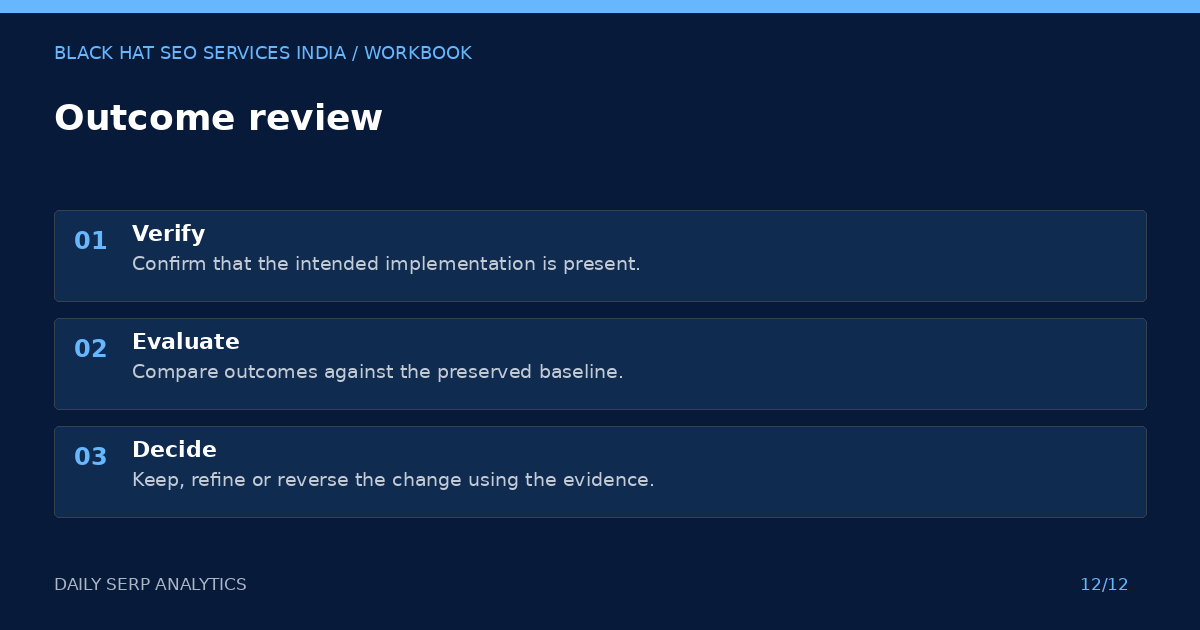
Verify: Confirm that the intended implementation is present. Evaluate: Compare outcomes against the preserved baseline. Decide: Keep, refine or reverse the change using the evidence.
Measurement and decision rules
| Signal | Interpretation | Next review |
|---|---|---|
| Impressions | Recorded exposure for the selected report scope | Compare the same query and page groups |
| Clicks | Recorded visits initiated from search results | Review result context and destination usefulness |
| CTR | Clicks divided by impressions | Inspect intent and result-layout changes |
| Average position | An aggregate across recorded impressions | Avoid treating a sitewide average as one fixed rank |
Search measurement glossary
- Impressions
- The number of times a result was shown in the selected Search Console report.
- Clicks
- The clicks recorded for results in the same Search Console report scope.
Frequently asked questions
What is the first step for daily serp analytics?
Daily SERP analytics means observing search-result changes against a consistent question set.
Should every keyword have a separate page?
No. Group variations that serve the same reader task. Create a new URL when the audience or purpose is meaningfully different.
Which evidence should I preserve?
Keep the original exports, observation dates, affected URLs, implementation log and review decision.
How do I judge an improvement?
Use a consistent baseline and page/query cohort, then distinguish completed implementation from observed search outcomes.
Does this guarantee a ranking position?
No. Use accountable work, accurate reporting and useful page content as the basis for decisions.
Download the companion PDF
Keep the complete guide, checklists and implementation workbook in a portable format.
Credits, sources and further review
Image credit and reuse
These twelve original instructional graphics were prepared for Black Hat SEO Services India. Credit: Black Hat SEO Services India — original guide artwork. For permission to reproduce or adapt a graphic, identify the image and contact the agency. No third-party stock photography is included.
Request image reuse permission
Official references
Need a search-growth plan for your website?
Share the domain, priority market and commercial goal. The first conversation can focus on where visibility is being lost, where demand exists and which changes deserve priority.